What’s a Gurdwara & other facts about Woolgoolga’s Sikh temples
13 Fascinating facts about Woopi’s famous Sikh temples
The white domes and golden spires rising over Woolgoolga belong to two of Australia’s most significant Gurdwaras. This coastal town, just north of Coffs Harbour is home to the country’s largest regional Sikh community, the Sikh Heritage Museum of Australia and a settlement story that stretches back to the 1800s. Here’s some helpful info for visitors to this NSW beachside village:
What is a Gurdwara?
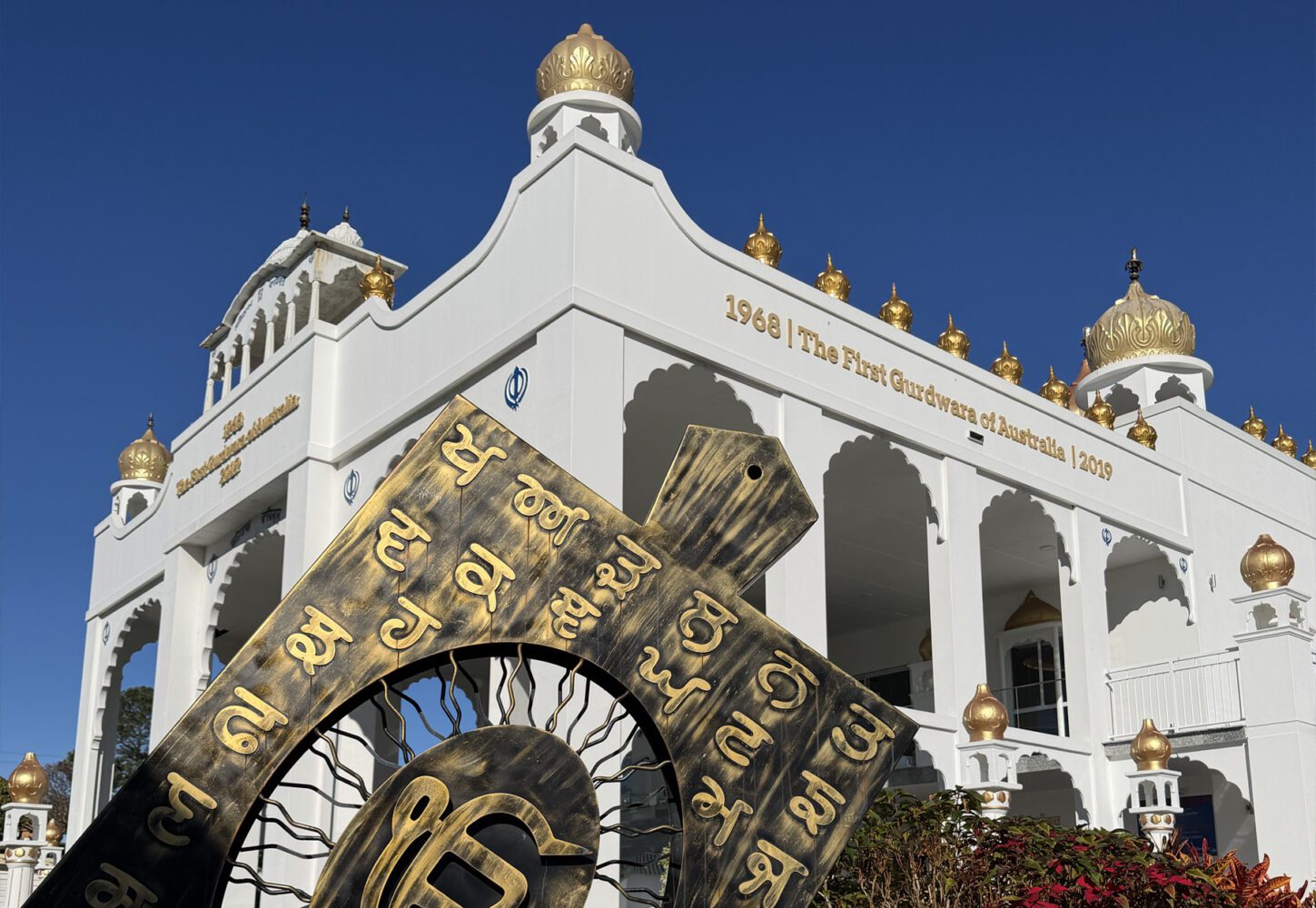
Many people call them temples, but a Sikh place of worship is actually a Gurdwara (also spelt Gurudwara), meaning ‘doorway to the Guru’. Woolgoolga has two Gurdwara’s: the First Sikh Temple of Australia on Hastings Street and the Guru Nanak Gurdwara, known locally as the temple on the hill. Both are open to everyone, whatever your background or beliefs.
Why does Woolgoolga have two Sikh temples?
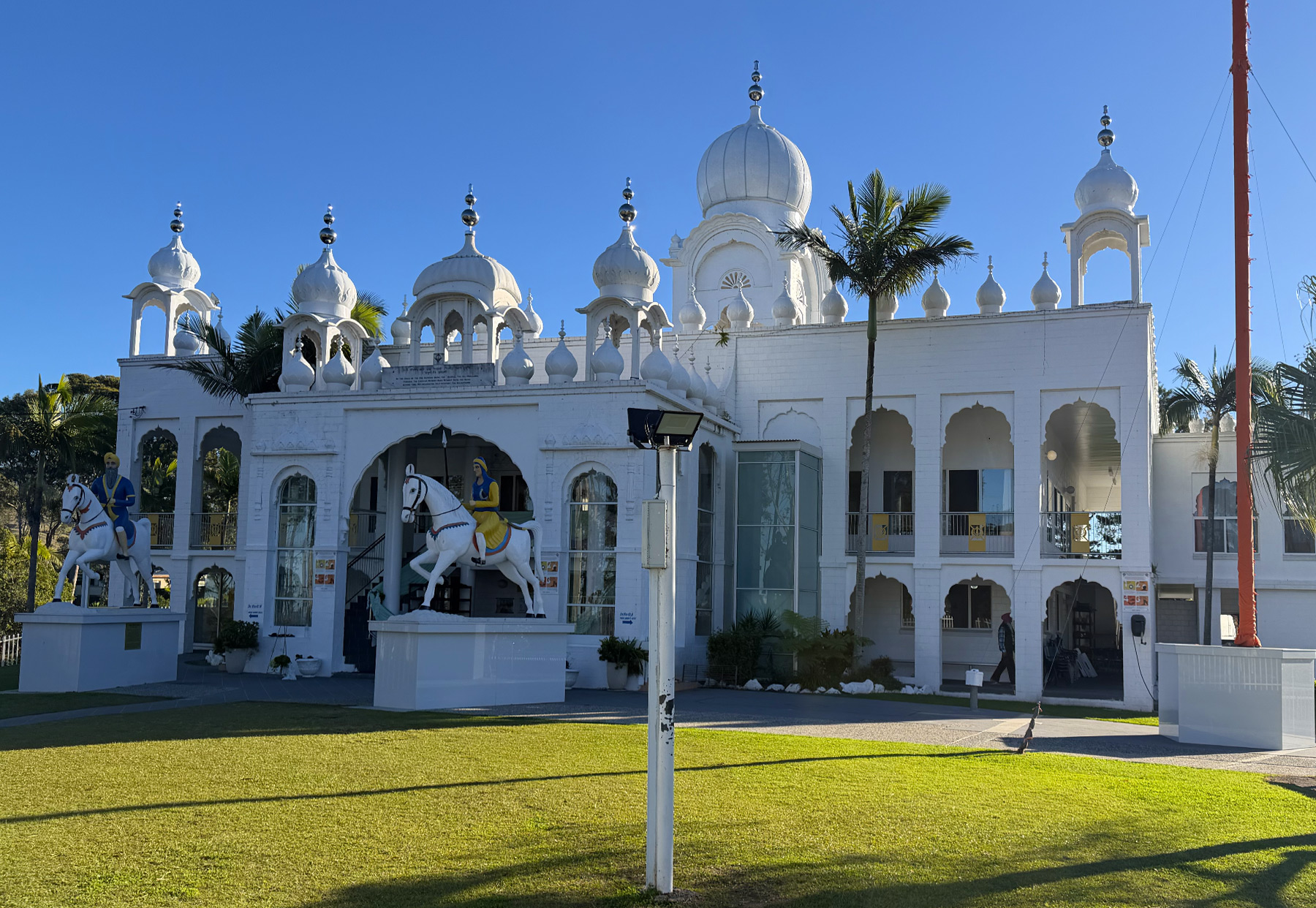
The First Sikh Temple of Australia (pictured above) opened in 1968 and was the first purpose-built Gurdwara in Australia. The congregation soon outgrew it, so the larger Guru Nanak Gurdwara (pictured below) opened in 1970 and became the main place of worship. The original building remains historically important and forms an impressive sight at sunset when the sun glistens off its golden turrets.
When did Sikhs first arrive in Australia?
Sikh farmers from Punjab began arriving in the late 1800s, when India and Australia were both part of the British Empire. Many cut sugar cane in Queensland and the Clarence Valley region around Grafton. After the White Australia Policy severely restricted further migration from 1901, it was their next generation who put down roots in Woolgoolga. Woolgoolga’s Sikhi residents contribute significantly to the local community.
How did the Sikh community settle in Woolgoolga?
In the 1940s, a Woolgoolga storekeeper brought back two Sikh cane cutters from Grafton to work on his banana plantation. Banana work ran all year round, so they stayed, word spread and families followed. Workers became farmers by leasing land, then buying plantations together, and established growers backed newer arrivals with loan guarantees. Today Sikh families grow around 90% of the region’s bananas and around one in six local residents identify as Sikh.
Can visitors go inside the Gurdwaras?
Yes! Sikhs believe every person is equal, so all visitors are welcome regardless of religion, culture or gender.
What should I wear to visit a Gurdwara?
Dress modestly, with shoulders and knees covered, remove your shoes and cover your head. Head scarves are usually available at the door. Volunteers are happy to guide you through the customs.
Can I visit with children?
Yes, the temples and museum welcome families. Kids can share a langar meal, spot the horseback statues at the gates and explore the museum’s interactive displays. Visits like these help children appreciate cultures beyond their own.
Is the food at the temples really free?
Yes. Every Gurdwara runs a langar, a community kitchen that serves free vegetarian meals to anyone who visits. Volunteers cook, serve and clean together, and everyone eats side by side as equals. During bushfires, floods and the Covid pandemic, Sikh communities across Australia fed firefighters, evacuees and neighbours in need.
What do Sikhs believe?
Sikhi was founded by Guru Nanak, who was born in Punjab in 1469, and shaped by ten Gurus. The word Sikh means ‘learner’, and the path centres on one Creator, honest work, sharing with others and treating all people as one human family. The Gurus taught that women and men are equal, and Sikhs respect every person’s religious freedom.
Why do Sikhs wear turbans?
The turban, or dastaar, is a visible sign of identity, equality and commitment to service and justice. Many everyday turbans use around 5 to 6 metres of cloth, ceremonial styles reach 8 metres or more, and practised wearers tie a fresh one each morning in 5 to 10 minutes. Children often wear a smaller version called a patka.
Do Sikhs cut their hair?
Most Sikhs keep their hair uncut. Unshorn hair, known as kesh, is one of the Five Ks, the articles of faith introduced by Guru Gobind Singh in 1699. It represents respect for the natural form given by the Creator, discipline and equality.
Is there a Sikh museum in Woolgoolga?
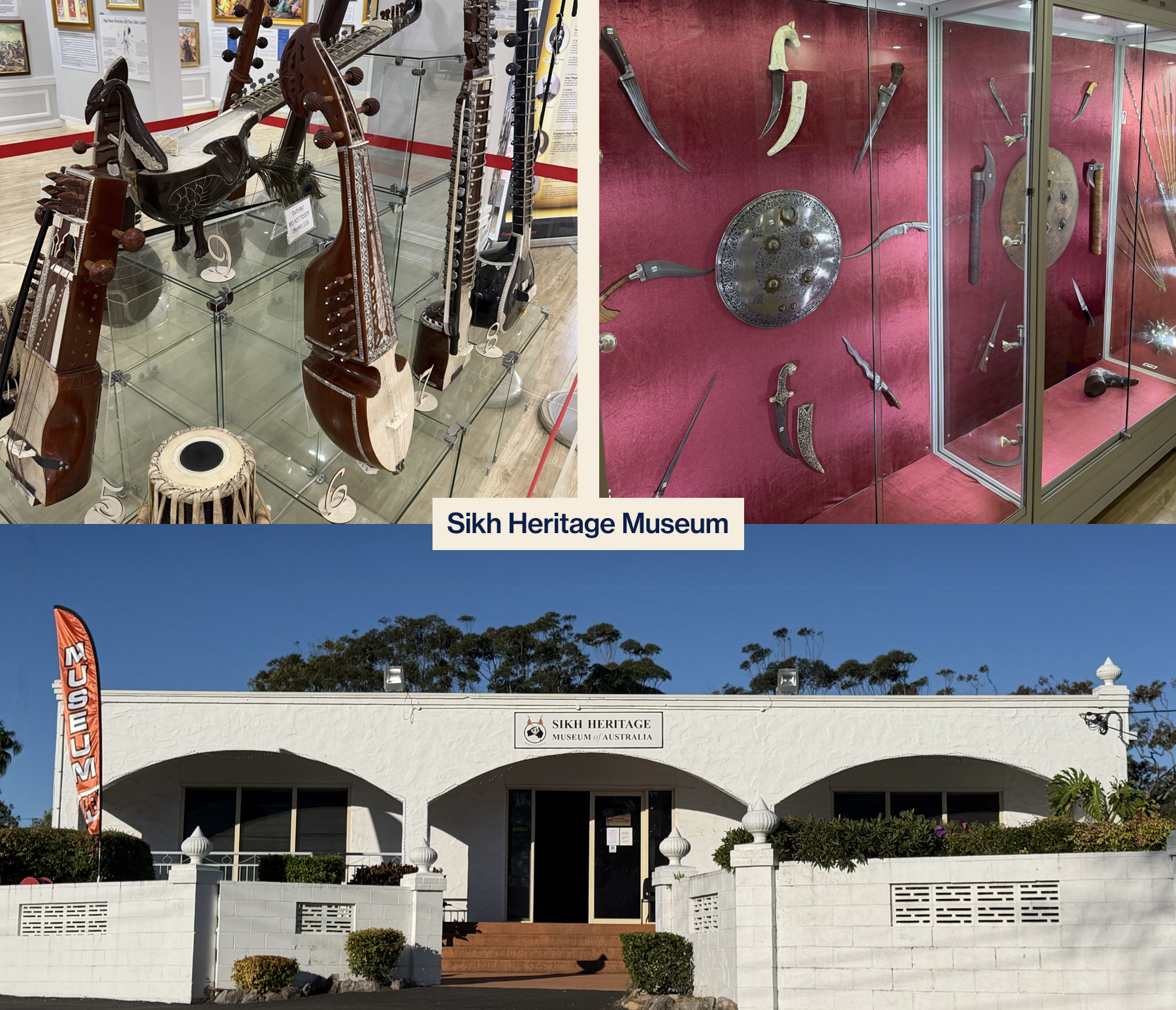
Yes. The Sikh Heritage Museum of Australia opened in April 2019 on River Street, opposite the Guru Nanak Gurdwara. We recently visited the museum and were given an excellent tour by Norman, a third generation Sikhi resident of the area. The children loved exploring the Indian / Punjabi musical instrument display, including a touchscreen to listen to the various sounds of these stringed instruments. Other exhibits cover the Ten Gurus, the Sikh empire, Sikh ANZACs in the World Wars and the migration story behind the Woolgoolga community. It opens Thursday to Sunday and sits on the Woolgoolga Heritage Walk.
What is Curryfest?
Curryfest is Woolgoolga’s signature festival, held each September since 2006. Swell Woolgoolga is a proud sponsor of this event which draws thousands of visitors to the Woolgoolga beachfront for Punjabi food, bhangra dancing, drumming and market stalls, and proceeds support local groups like surf lifesaving nippers.
Planning your visit
Both Gurdwaras and the Sikh Heritage Museum are open daily and entry is free, though donations help sustain the langar and community programs. Check the respective websites above for regular Kirtan (or Keertan) service times. Combine your visit with the Woolgoolga Heritage Walk and a swim at one of Woolgoolga’s surf beaches. However long you stay, expect a warm welcome.
Secure your land or new home in Swell Woolgoolga
- View plans and prices for all land for sale here.
Land is now selling from $490,000* – with Stage 1 well under construction and due for completion later this year. - To streamline your new home build, read more about house and land packages, delivered by our local partner builders including Coral Homes, GJ Gardner, Hunter Homes, McDonald Jones and Perry Homes here.
- Ask us to recommend a local architect to assist with your new home design.
- Get in touch with the exclusive Cardows x Swell project sales team here or call 1800 961 021 to arrange an inspection or to secure your preferred homesite.
- Follow Swell on Facebook and Swell on Instagram for all construction updates and new neighbourhood releases as they happen.
Swell is more than just a new land release. It’s an invitation to experience coastal living with modern convenience in the heart of Woolgoolga.